Before the internet became a handful of apps, it felt more like a place.
People made web pages, gathered in chat rooms, and followed links down strange paths, often delighted to discover others with shared interests on the far side of the world. The web was rough and uneven then, but that was part of the charm. A kid could learn a little code, put something online, and find out the world was bigger than the room he was sitting in.
Barry Deen was ten years old in Toronto when that feeling got him. He taught himself HTML and Perl, built his first website, and made his first money online. For a while, he ran kaiosama.com, the second biggest Dragon Ball Z site on the internet. Since then, he has made more than 500 websites, a number he has lost track of.
He did not grow up with money, and he says so plainly: “Grew up so poor but went to a rich kid school.” He is comfortable now, by a wide margin, but the early version of himself never quite left. All these years later: “I still carry that ‘poor kid’ identity with me everywhere.”
Online, he became known as UTXO the Webmaster.
Today, most of his energy goes into Wisp, his open-source social app built on nostr, an open protocol for publishing and sharing all kinds of information online, controlled by no company or government. Wisp’s mission can fit into a sentence: make a decentralized network feel easy, social, and worth opening every day, for people who will never care what a protocol is. Getting there took him twenty years, one badly timed bitcoin trade, and a long detour through nostr’s plumbing.
Built by the web
Ask Barry to describe himself and the builder is still front and center:
I’m an entrepreneur, a lover of all things tech, a foodie, and of course, a bitcoiner. I’m the guy the family calls when the computer is broken.
After high school, he skipped university and started a software business with his brother. That helped him land webmaster jobs at Aviva Insurance and American Express. They were good jobs by normal standards, and for the first time he was making real money. Almost immediately, he learned he could not stand having a boss or letting other people control his time.
So, he set out to buy his time back. He used his savings to buy websites on marketplaces like Flippa and Empire Flippers, improve them, sell them, trade domains, and keep going. The math appealed to him. A public stock might take decades to earn back its price; a small website, bought well, could sometimes do it in a couple of years. He also played poker and counted cards, for the income and the fun of it.
Large websites and domain sales eventually gave him financial independence. It did not make money irrelevant. It made time the thing he had won and could now choose how to spend.
It is tempting to call that ambition and leave it there. Barry put a finer point on it in a reply on nostr. Fellow bitcoiner American HODL had posted that people with hard childhoods tend to split into three groups: most are crushed by the weight, a few make real peace with it and move on, and a rare third group neither heals nor breaks but turns the old feeling into "a motor that never turns off," trying to "justify their existence with external achievement."
“I am #3,” Barry wrote back. The poor kid who taught himself to build never stopped needing to. Most of what follows is the sound of that motor.
The city he loved eventually wore him down. Barry was born and raised in Toronto and loved it through the 1990s and 2000s, when it felt magical to him. After the financial crisis, and especially after COVID, the traffic, crime, and house prices made it unbearable. So, he moved north, “as far away from the city as I can reasonably manage.”
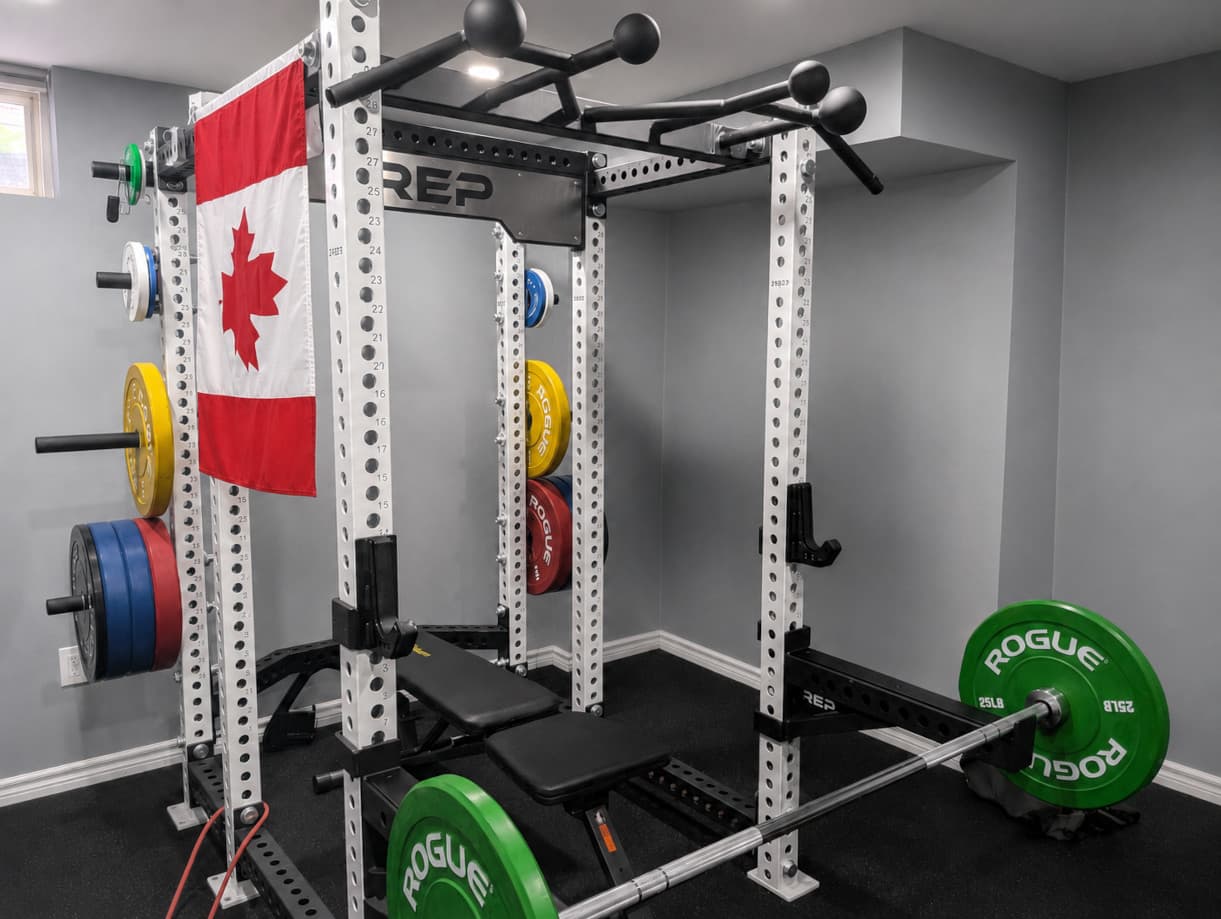
In the new house, he built out a basement to do what he does best. He calls the whole thing a giant man cave: a workstation, a TV and entertainment area, a gym, and a homelab for experimenting and running servers. “If I’m going to be a basement dweller,” he says, “might as well be a sick basement.” The gym has a white power rack and a Canadian flag draped over the weight pegs. Everything down there earns its keep.
Money that lives on the internet
Bitcoin did not click for Barry the first time, or the third time. He had passed on it at a dollar, at a hundred, at a thousand, then bought near the top of the 2017 run, around nineteen thousand dollars a coin. He bought other crypto too, “sadly,” as he puts it now. At first, it was just something to gamble on in Coinbase, and with bitcoin down more than eighty percent a year later, it looked like a failed investment.
His perspective changed in 2019, thanks to a website he had bought that already accepted crypto for a small share of sales. This time, he got to work on payments within a business he owned. "I experienced that same magical feeling I had as a kid learning to use the internet for the first time," he says.
Money that lives on the internet that I can control, that’s so cool.
He wanted to replace the site’s Coinbase processing with bitcoin-only, self-custody payments, so users would actually control their own bitcoin, not leave it with a third party. BTCPay Server provided the way but was missing features he needed, so he made his first open-source contribution to add them. The investor had become a user, the user a contributor, and the contributor the kind of bitcoiner who holds his own keys and wants others to do the same. That conviction is still the foundation of his work: in Barry’s view, bitcoin loses something essential when ordinary people cannot easily hold it themselves.
His first bitcoin conference, in 2021, sealed it. Going meant stepping out from behind his UTXO the Webmaster handle, far outside his comfort zone, and giving up being anonymous. He decided at that moment that this was a community he wanted to be part of, and hopefully help lead.
Plumbing in the wilderness
Nostr appealed to Barry for the same reason bitcoin did: it offered open access, but aimed to make online communication free from centralized control. Anyone can build an application on it. Anyone can run a relay, a server that helps carry messages across the network. And an account does not have to live inside one company’s platform. The network belongs to the people using it.
Barry joined in 2022. One of his first posts was just two words, “Running nostr,” echoing early bitcoin developer Hal Finney’s famous 2009 Twitter post, “Running bitcoin.” The nostr protocol made the internet feel buildable again. The apps were another story.
He came to nostr first as a user, and as a user he felt the experience getting worse. Apps were slow. Basic features lagged. It was hard to recommend to normal people.
So he decided to build beneath the surface. He built WoT Relay to fight spam, Haven to help posts move around the network and be found, and Algo Relay as an experiment in richer feeds. He also built Aegis, a tool that let anyone run their own premium relay and media server with payments handled in the background. He made bots for fun, too, like Rektbot, which posts to nostr whenever big liquidations hit traders making heavily leveraged bitcoin bets.
Most of this work lived underneath, laying the groundwork for better experiences on top. The trouble is that people do not notice plumbing when it works, and nostr apps did not widely adopt what he produced. The routing model he cared about did not become standard fast enough. He had a small grant to work on Algo Relay and canceled it himself, for lack of interest.
At the time, he says, “My work felt like it was all for nothing.”
Then he made his first donation ask from the nostr community, covering everything he had built for it so far. Millions of sats came in over hundreds of zaps. A sat is a tiny fraction of a bitcoin; a zap is one of those fractions attached to a nostr post like a tip. He got emotional.
I never received that level of recognition, ever; it’s a very rewarding feeling. Absolutely magical.
The money helped. The recognition mattered more.
The app he’d been waiting for
Everything up to this point turned out to be preparation. Two decades of building had taught him how to make things people actually want to use. Bitcoin had taught him what it means to hold something valuable yourself instead of trusting it to others. The years in the nostr wilderness had given him strong opinions about how the network should work underneath.
And yet he had resigned himself, for a while, to not building the nostr app he wanted. He had the backend instincts, the relay knowledge, the product taste. What he lacked was the front-end skill to make something polished enough to hand to normal friends. Then Claude Opus, one of the new generation of AI coding models, got good enough.
“Finally my vision for my perfect daily driver was possible,” he says. “I had the right architecture in mind for years, and now finally I have the developer who could make it come to life.”
The result is Wisp, a mobile app built on one stubborn idea: it should just work. Posts show up where they should. Under the hood, every post lives on many relays, so the app asks dozens at once and shows whichever copy arrives first, one reason it feels quick. “Don’t take my word for it, ask the users what they think,” he says. “The real reason why Wisp is good is because it’s fast.” It finds what you are looking for without you having to think about it, and handles the complex settings in the background so the experience stays simple.
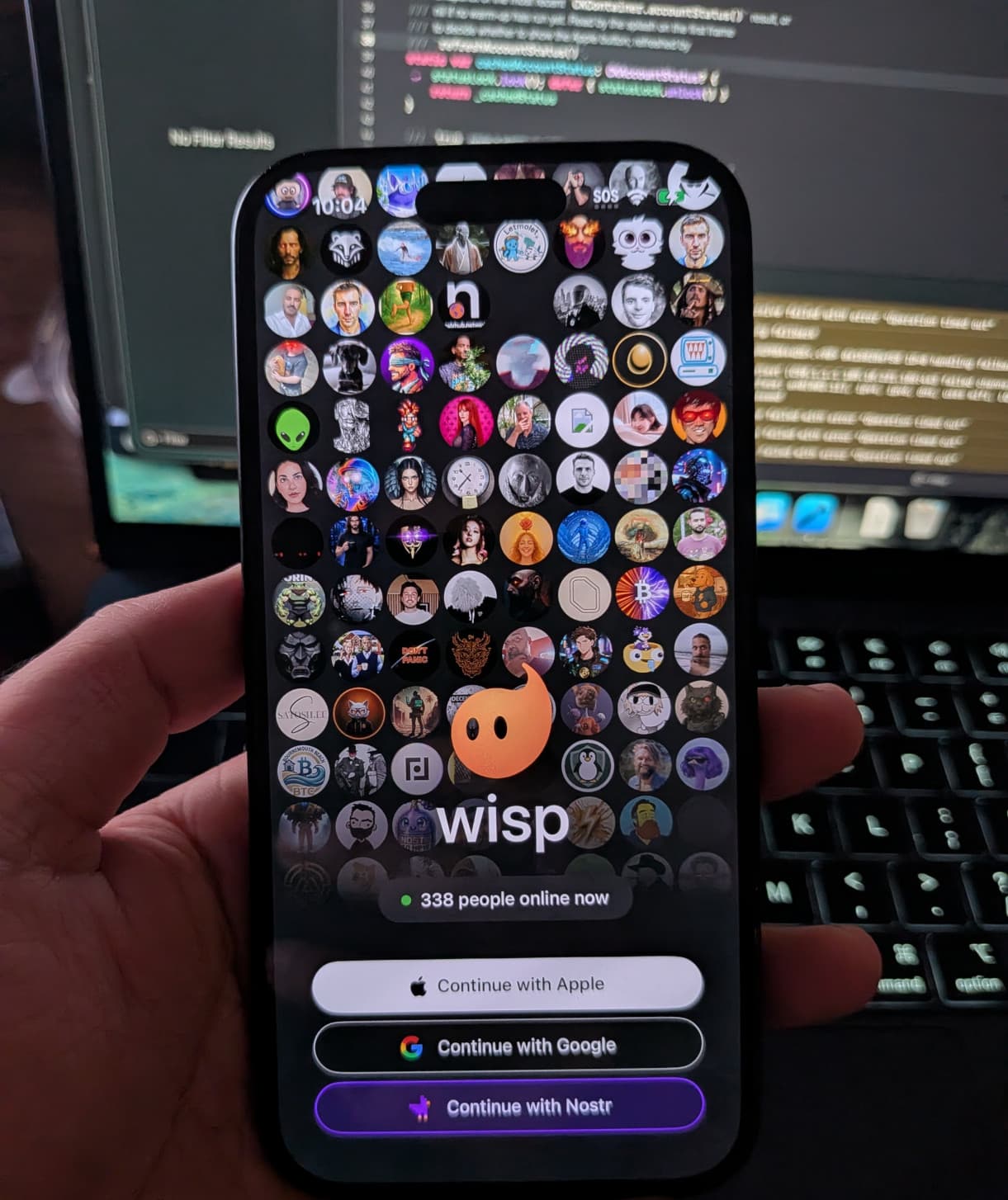
A new person downloads the app and signs in with whatever they already have. The welcome screen shows the Wisp logo, a swarm of profile pictures, “338 people online now,” and three buttons: Continue with Apple, Continue with Google, Continue with Nostr. The Nostr button is for people who already know. Apple and Google are for everyone else.
My only goal with Wisp is to make people like nostr and have it not feel so slow and broken.
The approach is working. Wisp has been the fastest-growing nostr app on Android since launch, and an iOS beta is now out on TestFlight.
His product philosophy is blunt. He believes in opinionated software, a clean experience, and minimal configuration. One app should not try to please everyone. Choice, to him, comes from having many apps with different ideas. He has little patience for software that needs a manual. “I always find it funny when someone needs a guide on how to use software,” he says. “That basically means the software is bad.”
It plays out in decisions that power users can argue about for days. For anyone who installs Wisp, the app starts in normie mode: zap amounts show in dollars instead of sats, and the word Bitcoin quietly becomes “money.” His thesis is that plenty of people see the word Bitcoin, assume crypto, assume scam, and run, and he would rather lose the vocabulary than lose the person. The dollar view even changed his own habits; a zap that sounds respectable in sats can look silly in pennies. “When you look at it in pennies, it’s too low, man,” he says. “It’s offensive.” Under the joke is the instinct he applies to everything: say what the button does.
One-man crew
Wisp came together at a pace that barely seems real. It went from first idea in February 2026 to a working version in about nine weeks, and the public record shows it: more than a thousand changes and dozens of releases. It reads like the work of a small team.
But there is no team. Barry did not even write most of the code himself, and did not have to. He spent the last two decades learning to build software, and with Wisp that skill moved somewhere else. He uses AI agents to do much of the coding: he defines the patterns, splits the work into pieces that several agents can run at once without colliding, reviews what comes back, fixes what breaks, and keeps pushing. It shifts his role from writing every line to orchestrating how the system comes together.
“I am only a developer by necessity,” he says. His calling, as he sees it, is building products and businesses; he learned to code only because hiring developers was too expensive. Now that a model can handle the mechanical work for a few dollars a day, he does not miss doing it all himself. “To me it feels amazing,” he says.
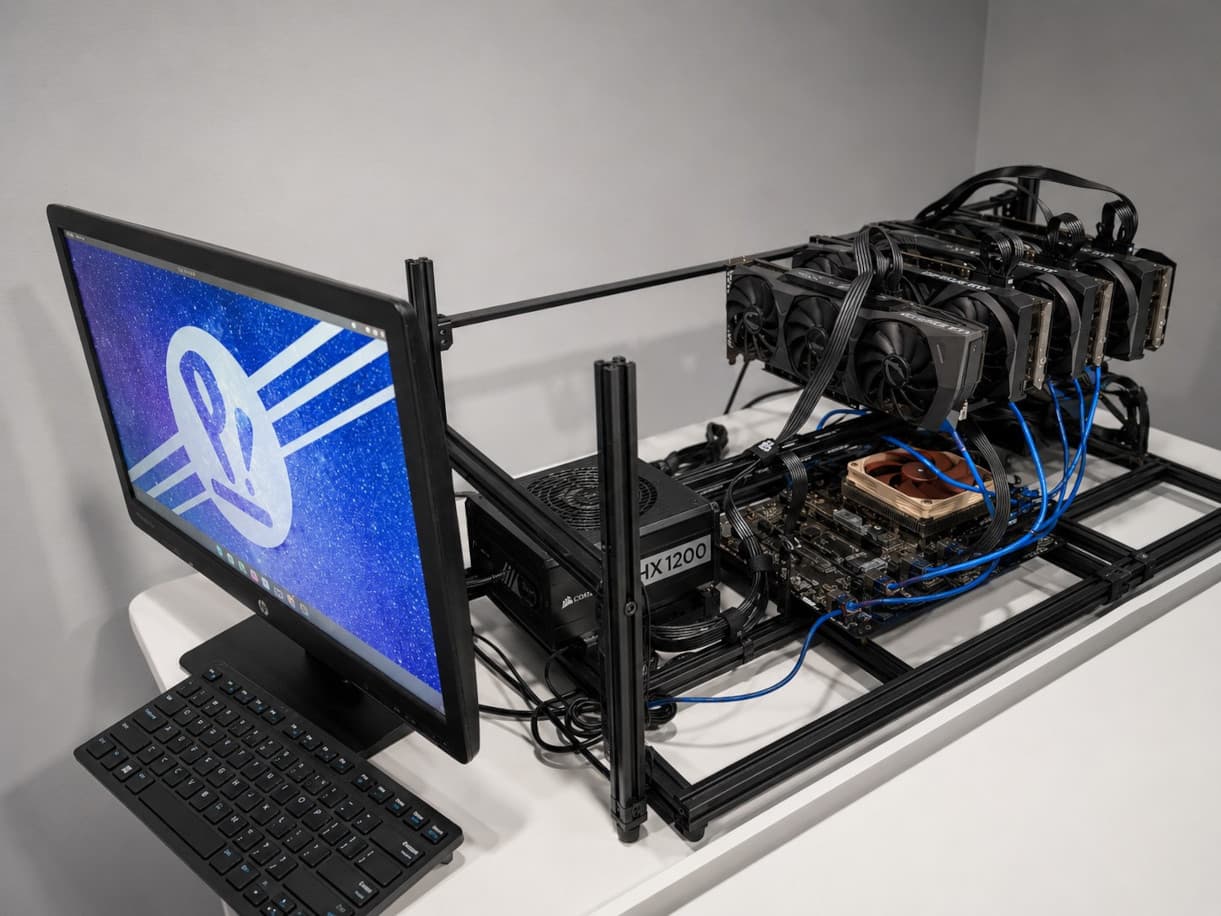
Claude and Codex do the heavy lifting on his main project. The local models he runs himself, Qwen and Gemma, play a supporting role, handling chatbots, search, agents, and private experiments on a homemade rig in the homelab: four high-end graphics cards mounted in an open frame, a stack of tower computers, and cabling strung across a corner built for tinkering.
There is an obvious tension in an open-source developer leaning on closed-source AI, and his answer is practical. “I have no need for privacy when I’m building Wisp,” he says. “All that code is published.” Open-source models are catching up fast and genuinely excite him; Claude is not the only good tool, and when the machines fall short, he still writes the code himself. The fast pace is partly the new machinery and partly the old temperament, and his own answer credits the unglamorous half:
The biggest secret is just long hours, attention to detail, and hard work. Proof of work.
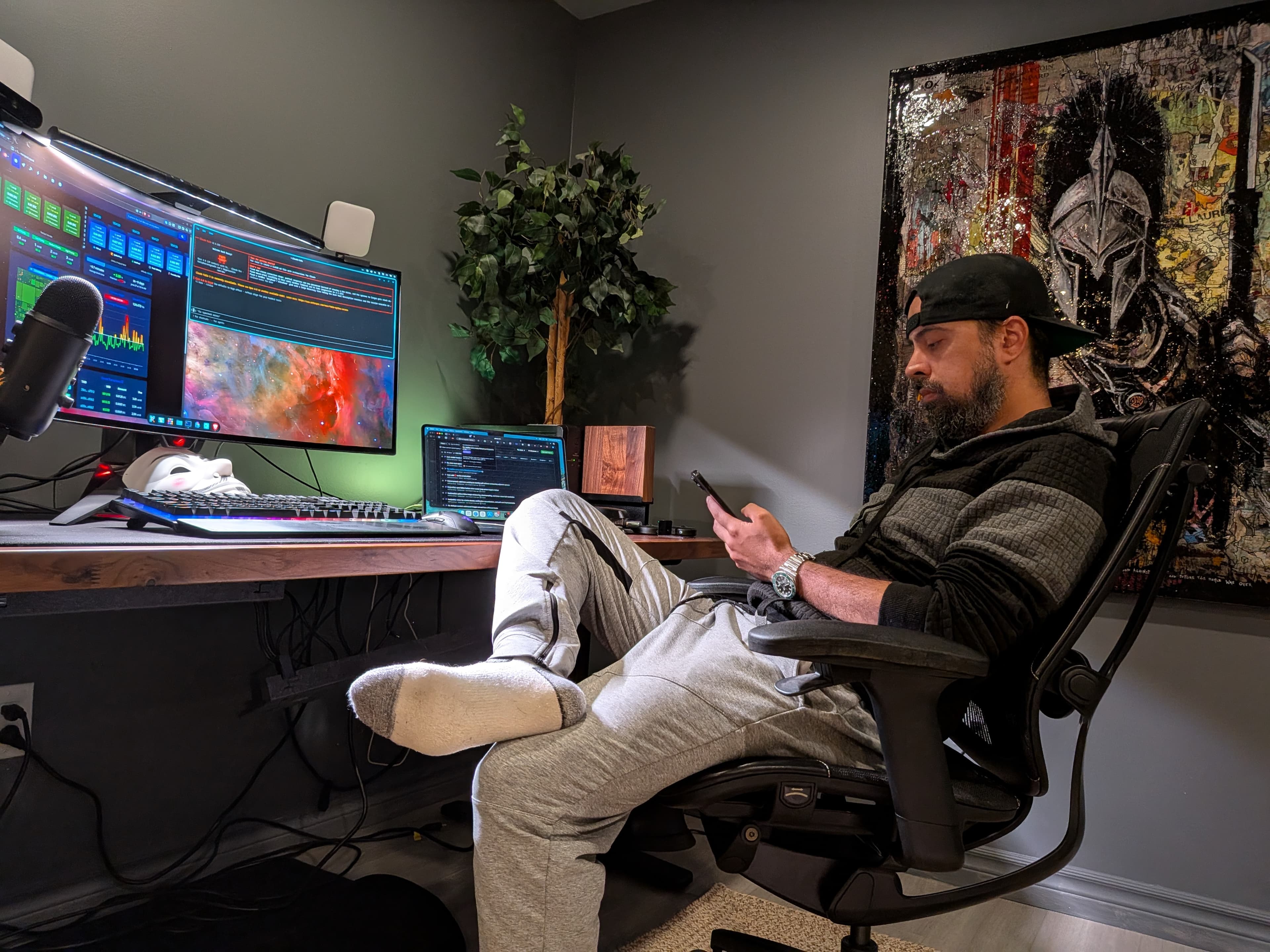
He works on all of this at a walnut-edged standing desk with a wide monitor and a laptop open beside it, a mechanical keyboard under his hands, and bitcoin blocks streaming by from mempool.space on one side of the screen while code runs on the other. A microphone sits within reach, and a Guy Fawkes mask from V for Vendetta rests near the keyboard.
On the wall hangs a large MADEX painting of an armored warrior in a plumed helmet, sword in hand, built up in heavy texture and sealed in glossy resin. It was the first piece of valuable art he ever bought. Look closely, and the collage beneath the resin is made from pages of The Bitcoin Standard, and along the bottom edge, lettered small, runs a line borrowed from the film 300 about free men standing against a tyrant.
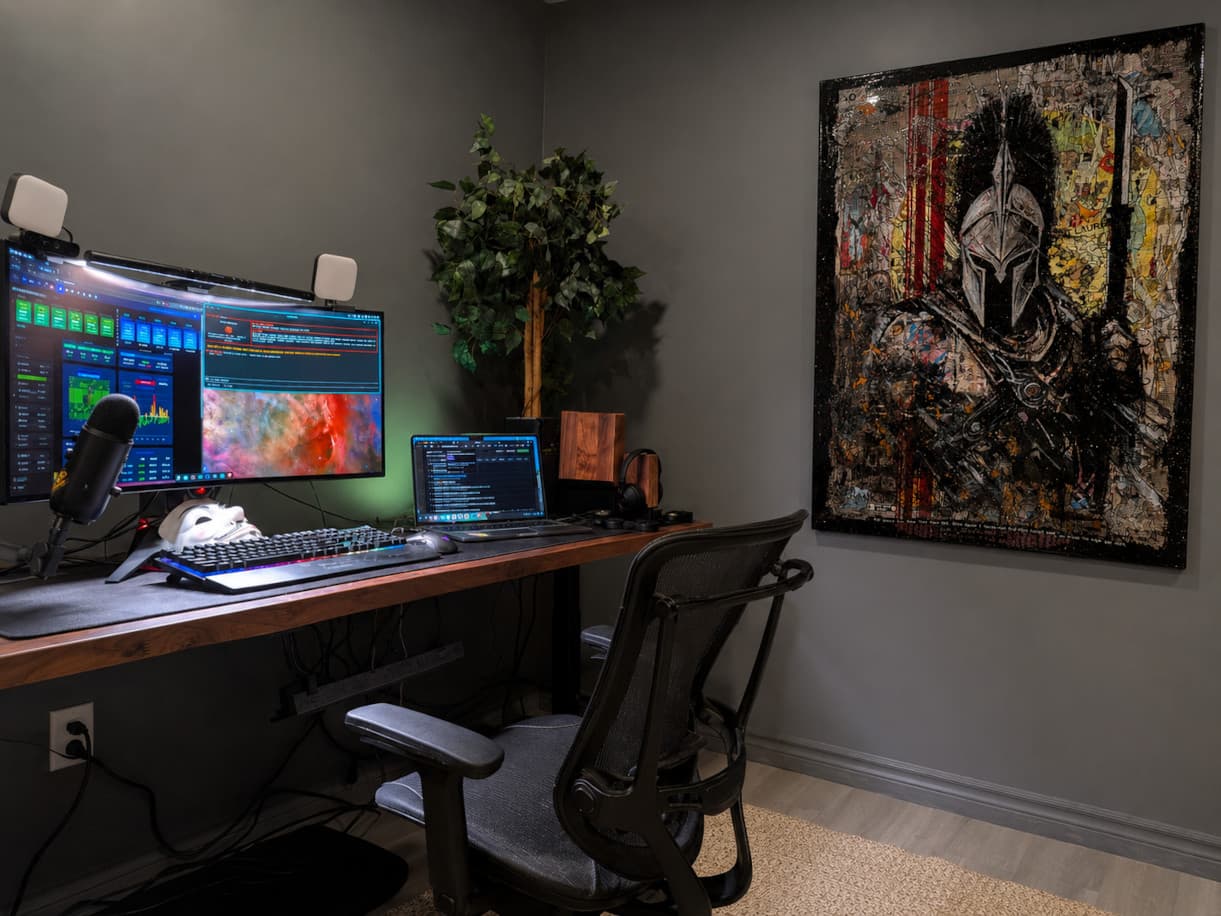
I am revenge building for years of broken nostr UX.
The revenge is mostly a working app that feels effortless to normal users. His favorite feature began as a tangent. During the nine-week sprint, he was playing with grimoire, a nostr app built for developers, “looking for ideas to steal.” fiatjaf, the creator of nostr, had mentioned NIP-29, one of the protocol’s specs for group chat rooms, to him many times, but it never clicked. “He’s an architect,” Barry says, referring to fiatjaf, “and I don’t speak that language.” An architect hands you the blueprint; Barry needs to see the building go up. In grimoire, he finally did, chat rooms alive on the screen, and they struck him as beautiful and nostalgic, the kind of place the early web used to be. He brought chat rooms into Wisp. “Chat rooms are awesome,” he says. Most people do not wake up wanting an open communication protocol. They want somewhere to talk.
Easy is worth the effort
Underneath the whole project sits a worry, one that has run through his work since his BTCPay days: open tools keep drifting back under the control of a few companies, simply because the easy path keeps winning. He has watched it happen with bitcoin, where people keep handing their coins back to custodians. “We could have done better to reach more people,” he says, “to make our tools easier, to warn people that bitcoin only has value when you hold the keys.”
Something similar happens with social media. People pour years into building an audience and a body of work they do not truly own inside the platforms. The followers, the posts, the reach, all of it lives inside a company, on terms the company sets. Same trade, different asset: you put in the effort, and someone else ends up holding what you built.
The response is the one he always has. When he sees a barrier, he makes a tool to clear it. And the barrier here is not the idea but the experience. Open, self-sovereign tools tend to be built by and for technical people, and Barry thinks his own tribe is part of the problem. “Bitcoiners are so accustomed to really complicated UX that they don’t see the problems on nostr,” he says. They have lost the taste for easy. So a normal person bounces off the open tools and goes back to the easy custodial app. The open alternative can be right on principle and still lose, purely because it is harder to use. Making it easy enough that an ordinary person will actually choose it is, more than anything, what he is trying to do.
The proof is on Wisp's own welcome screen. Behind the Continue with Apple and Continue with Google buttons, the app quietly generates a real nostr keypair on the phone, locks its backup behind a PIN only the user knows, and encrypts it, so the user who signed up like it was any other social media app is already holding their own nostr keys.
Fuel for the motor
Barry’s future for Wisp is large enough to sound unreasonable if you strip out the grin. Asked where Wisp could be in eighteen months if everything goes right, he imagines “hundreds of millions of users having fun, chatting with their friends, posting memes, live streaming and zapping away like crazy.” He wants bitcoin to feel like a normal way to send money to friends and creators, and social media where people own what they post and are not kept angry for ad views. There is no final version in his mind. Competitors will keep improving, so Wisp has to keep moving.
OpenSats gives him the room to do that full-time. The grant, awarded in May 2026, funds a full year of Wisp development. He bought back his time once through websites and domains, but open-source work still competes with the paying work he could be doing instead. Funding removes that pull and lets him aim the whole motor at one target.
The normie and the quiet house
Back home, none of it carries much weight. He is open about what he does, and his neighbors and family mostly treat it as ordinary Barry stuff. The eye-rolls sting a little, he admits, though he understands their point of view.
It does sound a little whack to say we’re going to overthrow the financial system with our Raspberry Pis in the basement and restore freedom of speech with a bunch of janky apps lol.
His lives as Barry and UTXO the Webmaster collided exactly once, the year he brought his closest friend, a man he calls a brother, to a bitcoin conference. The friend met the people from Barry’s other life and walked away a bitcoiner. In Barry’s words, “he got orange pilled af.”
The rest of the time he is closer to ordinary than UTXO the Webmaster might suggest. He cooks, hikes with Harvey, his big Rottweiler, and spends time with friends and family. When he works late, it is usually because he is trying to fix an obnoxious software bug; he would rather call it at a reasonable hour, eat a meal, watch some television, and scroll nostr before bed.
He keeps trying to get back into the video games he loved as a kid and cannot quite manage it. StarCraft is still the best ever made, he will tell you, and it is not even close. “RIP being young,” he says. He is not complaining. He considers himself “very blessed, comparatively speaking.” Building things is his happy place. “I guess you can say I’m kind of a normie too.”
When all is said and done for the day, and evening comes, Barry turns off the basement lights to head upstairs. In a dark corner, a few small Bitaxe miners run through the night, mostly for the fun of it but also with a long shot at lottery odds: the tiny chance they solve a Bitcoin block and pay out the full reward, currently a little over three bitcoin. They will still be at it in the morning. So will Barry.
The house goes quiet. Downstairs, the warrior keeps watch over the workstation. Upstairs, Harvey is asleep on his orthopedic bed, though sometimes, he likes to sleep beside it.
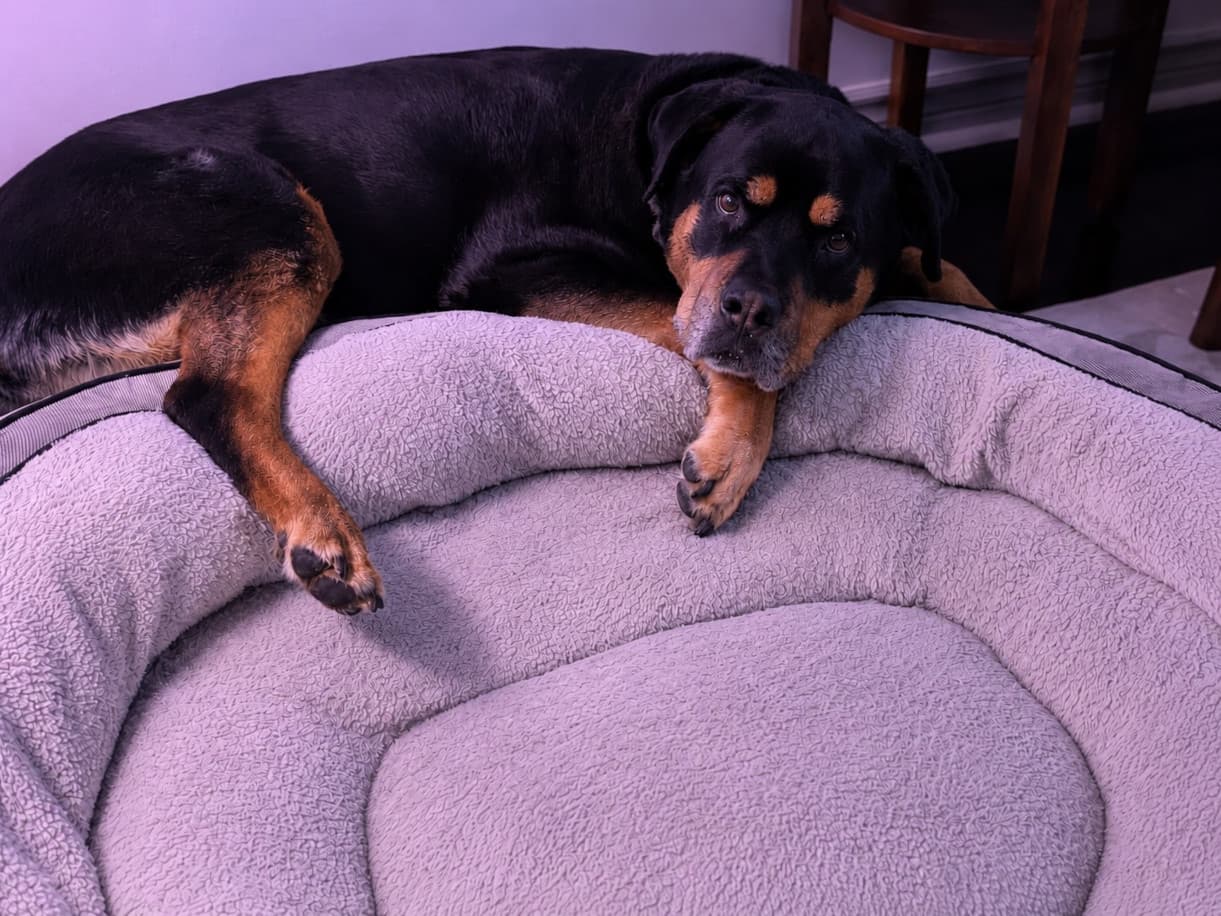
Barry Deen received a grant for Wisp in May 2026. “Without OpenSats,” he says, “I would have no choice but to work on other projects and Wisp would forever be a side project. Not having to worry about my lost opportunity cost gives me the space to give Wisp everything I got.”
If you want to support Barry, recommend Wisp to someone who wants nostr to feel easy, social, and alive. Our support for Barry’s work was made possible thanks to your generous donations to The Nostr Fund.
For comments, corrections, or suggestions about our Spotlight series, please reach out to spotlight@opensats.org.